Inside U2Baby's Adam Clayton Obsession
There's a moment in every great U2 tribute show where the room stops thinking about the stand-ins and starts feeling the real thing. It rarely happens on a big chorus or a guitar solo. More often, it happens somewhere underneath — in the low, steady pulse that's been holding the song together the whole time without asking for credit.
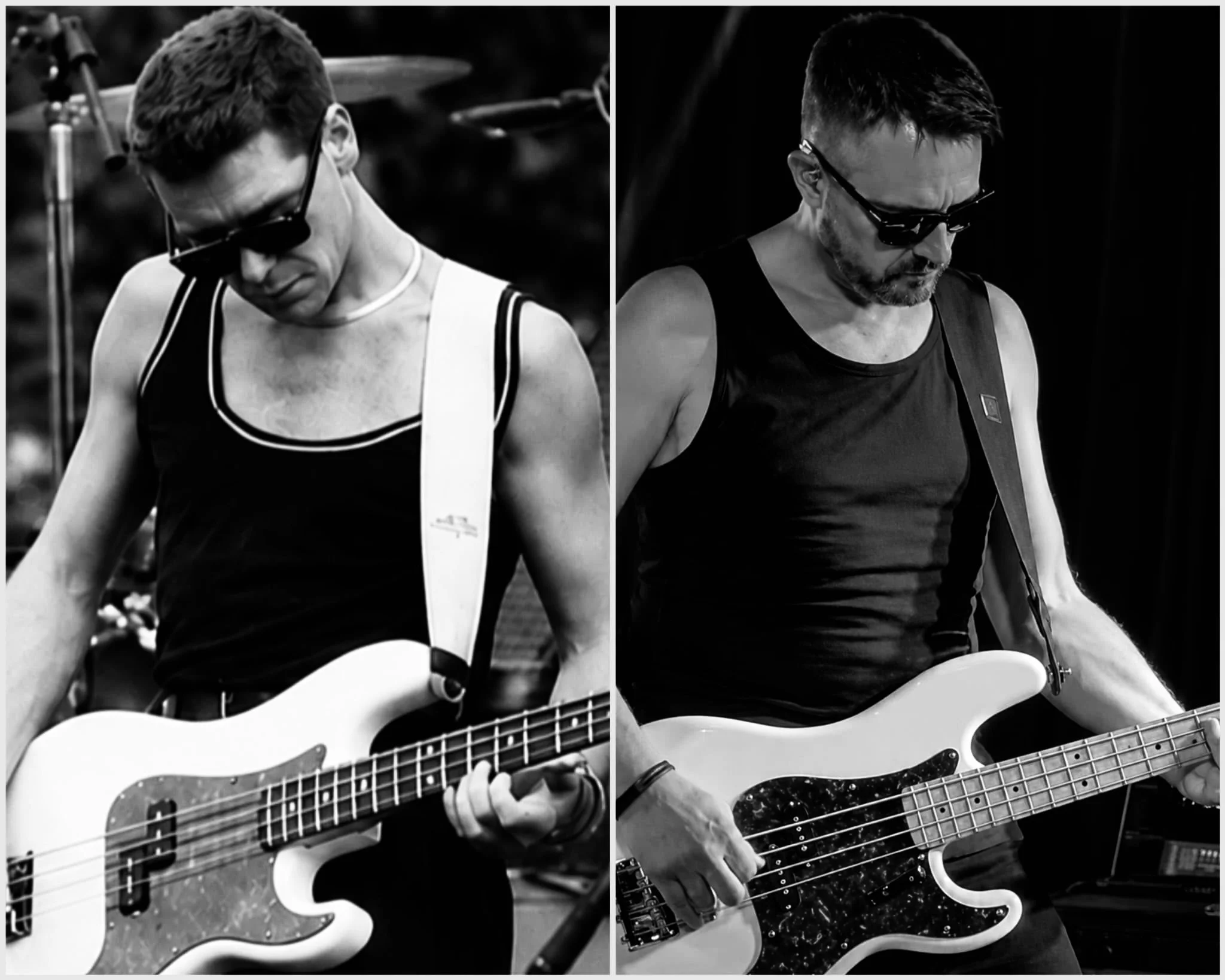
That's Adam Clayton's territory. And recreating it, night after night, in front of crowds who know every bar of the original by heart, is the job of Zoli Czibere — bassist for U2Baby, one of the most respected U2 tribute acts performing today.
Clayton has never chased the spotlight the way Bono or The Edge do. But strip him out of a U2 song and the whole thing sags. His parts look deceptively simple on paper. That simplicity is precisely what makes them so brutal to get right on stage, in real time, for two hours a night. We sat down with Zoli to talk about the discipline behind U2's most underrated instrument — and what it takes to channel it convincingly.
The Moment It Clicked
Zoli didn't arrive at U2 through fandom. He arrived through the instrument itself — and U2 found him later, at exactly the right moment.
"'Sometimes You Can't Make It On Your Own,'" he says, without hesitation, when asked which bassline first made him stop and pay attention. "The verse theme, the tempo that never lets up, the way the bass and drums lock together to carry the whole song — that was the first time I really felt how much weight Adam's part was holding up."
It's a telling choice. Not a flashy single, not a stadium anthem — a song where the bass is doing quiet, structural work most listeners never consciously notice. That's the instinct that separates a good tribute player from a great one: hearing the thing everyone else is standing on.
The Art of Restraint
Ask Zoli whether "minimalist" is a fair label for Clayton, and he pushes back — gently, but firmly.
"It's fair, but incomplete," he says. "The parts aren't complicated. It's the effect they create that matters. Larry and Adam are the foundation everyone else stands on, even if people think of The Edge and Bono first." Tone matters just as much as notes, he adds — that compressed, low-end weight that's instantly identifiable the moment it hits a room.
But it's what Clayton doesn't play that Zoli keeps returning to.
"That's the real skill, and it's what makes his parts so hard to reproduce honestly," he says. "Anyone can learn the notes. The hard part is trusting the empty space as much as the notes themselves — playing exactly what a song needs and nothing more, consistently, show after show. As a tribute player, that restraint is the actual test."
It's a strange kind of pressure — the discipline to hold back, night after night, in front of audiences who'd notice if you filled the silence with even one extra note.
Playing the Ghost
If the notes are simple, why is the part so hard to deliver live? Zoli doesn't hesitate on this one either.
"Feel, without question," he says. "The notes aren't the challenge — U2 basslines are famously approachable. The challenge is everything around the notes: the presence, the stance, the way Adam carries himself on stage. In a tribute band, you're not just playing the part, you're recreating the feeling of watching him play it. That's a much higher bar."
He runs through a short list of songs that look effortless and aren't. "'Gloria' — the bass solo, and the pressure of everyone watching you land it," he says. "'Where the Streets Have No Name' — a locked, unrelenting tempo for nearly five minutes. 'With or Without You' — four notes, repeated for the length of the song. Lose focus for a second and you'll drift."
Two songs, though, get a different tone entirely — something closer to reverence. "'Heartland' has this steady, circular pulse that carries the whole track, like a long highway drive," he says. "And 'One' — you have to play it emotionally, not just correctly, or the song loses everything U2 built into it."
The Discipline Behind the Sound
Talk to Zoli long enough and one idea keeps resurfacing, in different forms, across every answer: U2's basslines were never about difficulty. They're about discipline — knowing exactly what a song needs, and having the restraint to give it nothing more.
It's a philosophy that says as much about U2Baby as it does about Adam Clayton. Chasing that feeling — precisely, patiently, night after night — is the whole point.