Chasing the Edge: What It Actually Takes to Get That Guitar Sound Right
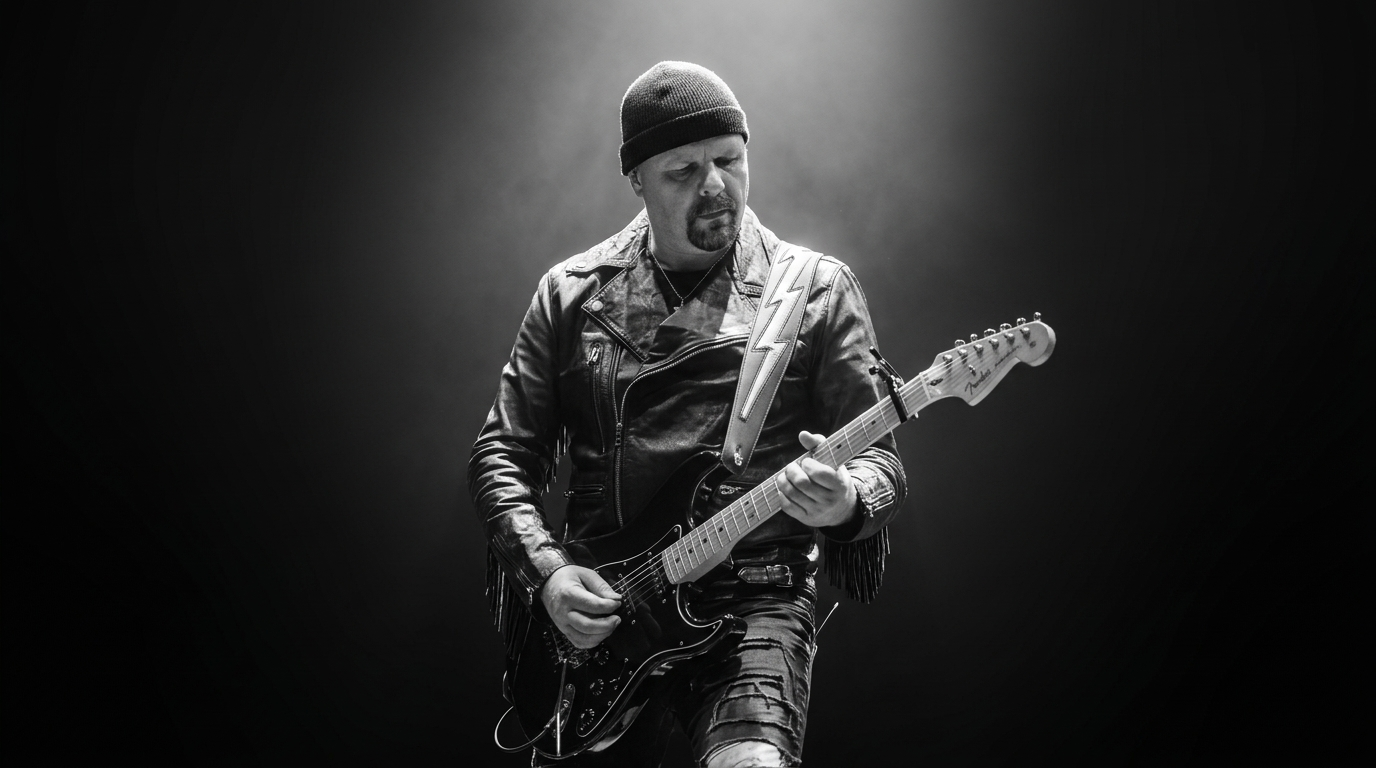
Ask any U2 fan what makes the band instantly recognisable and the guitar comes up almost immediately. That shimmering, cascading sound the Edge built his whole career around isn't an accident, and it isn't a preset either. It's a specific set of decisions, made note by note — and getting close to it has taken our guitarist years of digging into the detail.
We recently sat down with Strings Direct to talk through two of those details properly, on camera. Not as a gear demo, but as an attempt to explain why these particular choices matter — because with the Edge, the technique and the emotion are the same thing.
Eighth notes and dotted eighth, together: the rhythm underneath everything
The first video digs into delay — specifically what happens when you run a straight eighth-note repeat and a dotted-eighth repeat at the same time. It sounds like a small technical distinction, but layering the two together is what actually creates that unmistakable Edge sound: one delay keeps a steady pulse underneath, while the other pulls slightly ahead of it, so the part never quite feels like it's sitting still. That combination is one of the most defining fingerprints of the Edge's playing — it's what turns a simple, sparse guitar line into something that feels like it's got momentum and depth built into it, almost like two guitars playing at once.
Watch it here: Delay: eighth and dotted eighth together
The Herdim pick, turned around
The second video is a smaller detail, but just as telling. The Edge is known for using a Herdim pick — and famously, turning it around to strike the strings with the textured, grippy side rather than the smooth point. It changes the attack completely: a rougher, more percussive edge to every note, something between a pick and a scrape. It's the kind of thing that's easy to miss watching from the crowd, but it's part of why his rhythm parts have that bite.
Watch it here: The Herdim pick, reversed
Why the detail matters
Neither of these things is about ticking a box marked "authenticity." They're about understanding why the Edge plays the way he does — what those choices actually do to a song emotionally. Running two delays together instead of one isn't just a technical trick, it's what makes a part feel like it's got space and momentum, like there's more than one guitar in the room. The reversed pick isn't just a texture, it's urgency and grit built into the attack before a single chord even rings out.
That's the part that's easy to miss if you're only listening for the big, obvious stuff — the wall of chorus, the chiming top string. The real character lives in these smaller mechanical choices, like the way two delays interact rather than one, and getting them right is what lets a part breathe the way it's supposed to.
We didn't write these songs, and we'll never claim to fully understand every decision that went into them. But digging this deep into the mechanics is our way of trying to honour them properly — because when you get the details right, the feeling takes care of itself.
For more on the band, our shows, and the story so far, visit theu2tributeuk.com.